From Protocol
<br>
to Product.
2019 - 2023
Product & Design Lead
REEF
Reef Chain had the infrastructure.
We designed the layer on top.
For a crypto-native audience that distrusts anything that looks too simple.
This case study covers the DeFi aggregator era of the product.
DeFi wasn't a product. It was a collection of tools.
Every protocol lived in isolation. Users had to navigate a fragmented ecosystem of DEXs, staking dashboards, lending platforms and yield farms each with its own interface, its own logic, its own risks. Entry was expensive. Errors were expensive. Confidence was rare.
The real problem wasn't complexity. It was the illusion that complexity was inevitable.
No single entry point · No unified mental model · Every mistake is expensive
Design the experience, not the features.
Rather than adding another tool to the pile, the challenge was architectural.
Define a single layer that abstracts everything below it, expose only what the user needs to make confident decisions.
This meant saying no to feature parity with competitors and yes to a product that felt like a cohesive whole.
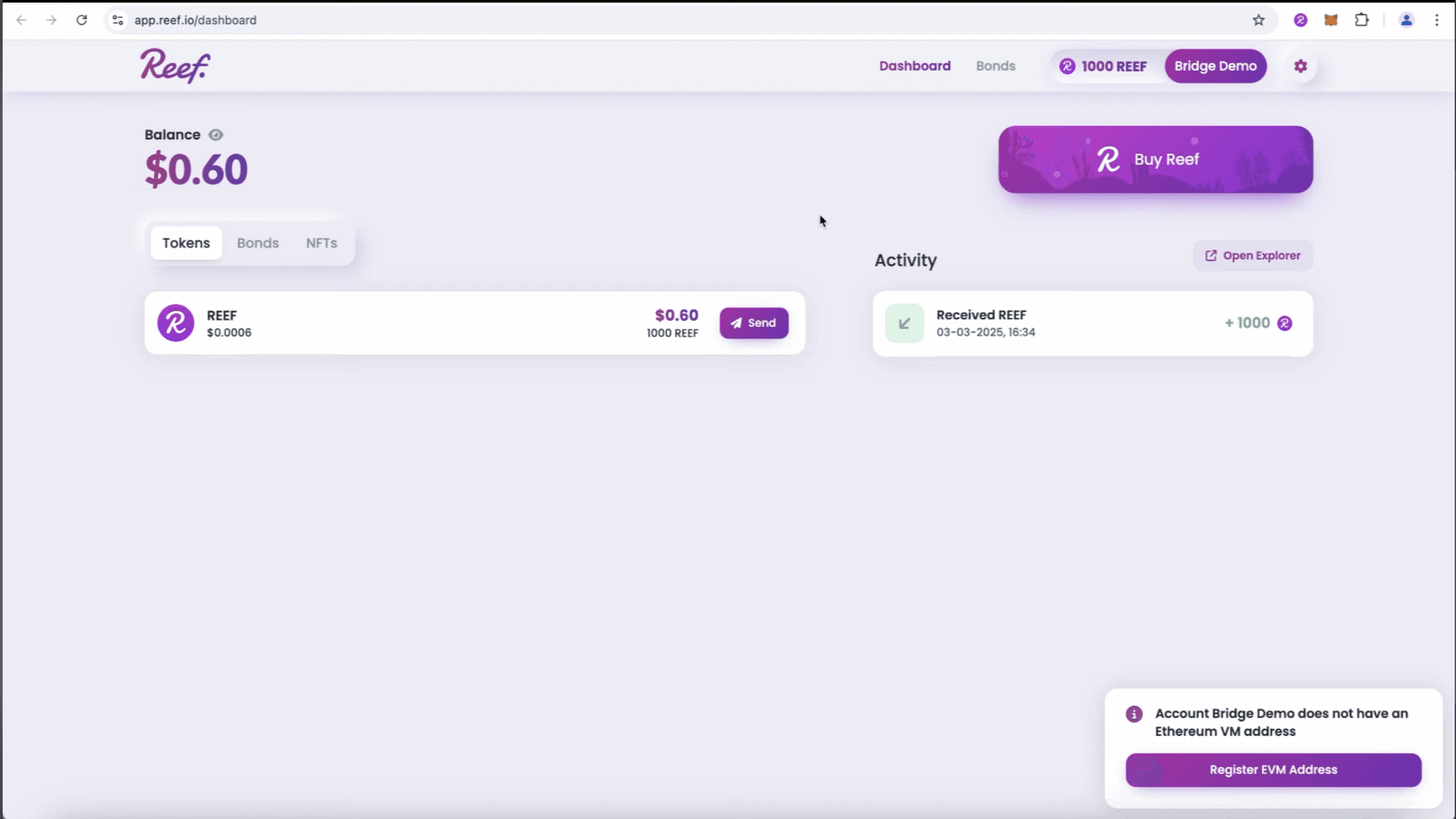
The interface, built.
Web dashboard and mobile wallet one design system, two surfaces.
The same mental model whether you are on desktop or on the go.

Four principles that shaped everything.
Not philosophies — real product tradeoffs. Each one came from a specific tension we hit during the process.
Key Decisions
1
One entry point
→ Reduced decision fatigue
Users don't choose tools — they choose actions. "I want to earn yield" is a valid intent. "Go to the farming tab, approve token, set slippage, confirm gas" is not a product. We collapsed the decision tree so users take one step at a time.
2
Abstract the complexity
→ Advanced mode preserved
Protocol-level decisions — router selection, liquidity source, bridge path — were invisible by default. Power users could access them. But they weren't part of the primary flow. Hiding ≠ removing.
3
Guide, don't educate
→ Removed 4 onboarding screens
Killed the documentation-heavy approach. Instead of explaining how liquidity pools work, we surfaced what users actually care about: APY, risk level, current allocation. Context over curriculum.
4
Safety through clarity
→ Reduced support volume
In DeFi, unclear UI costs users real money. Every destructive action required explicit confirmation with plain-language consequences shown before signing. Clarity was a risk mitigation strategy.
DeFi as a system, not a set of features.
The product was designed in three layers, each with its own logic, failure modes, and design language.
The user never sees the seams.
The hardest part wasn't designing any single screen.
It was designing how the layers talk to each other and what the user never has to see.
Liquidity Aggregation
Best execution across multiple DEXs and pools without exposing routing logic. Smart order routing happens invisibly.
Multi-chain Abstraction
Unified portfolio view and actions across chains. Chain selection only surfaces when it genuinely matters to the decision.
Unified UX Layer
Single interface for swap, stake, lend, farm, bridge. One mental model. Consistent patterns from first action to last.
A more accessible DeFi experience.
Reduced cognitive load
Significantly fewer abandoned flows after unification. The "where do I start?" question disappeared from user feedback entirely.
Clearer user journeys
Every action — swap, stake, earn — followed the same three-step structure: select intent, review, confirm. No exceptions. No dead ends.
Stronger positioning
Reef shifted from "another DeFi tool" to "DeFi for people who don't have time to learn DeFi" — a distinct, defensible market position.
Making DeFi feel like a product,
not a protocol.