2023 - 2025
Lead Designer
Stashed
A crypto wallet built around confidence in irreversible systems
High-risk actions deserve the most clarity, not the least friction.
Most crypto wallets optimize for speed.
Stashed was built on the opposite premise the moment of highest financial risk deserves the most intentional design.
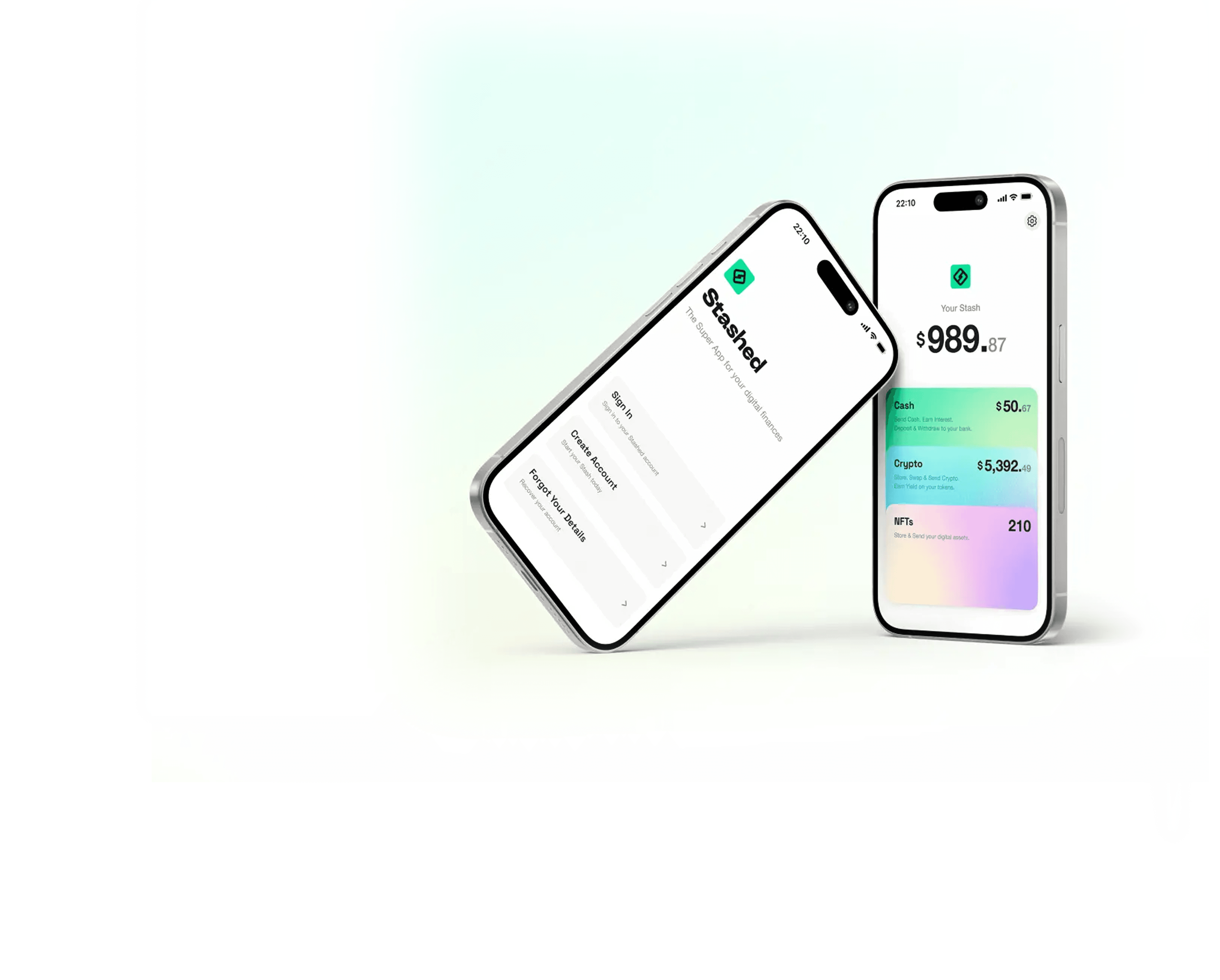
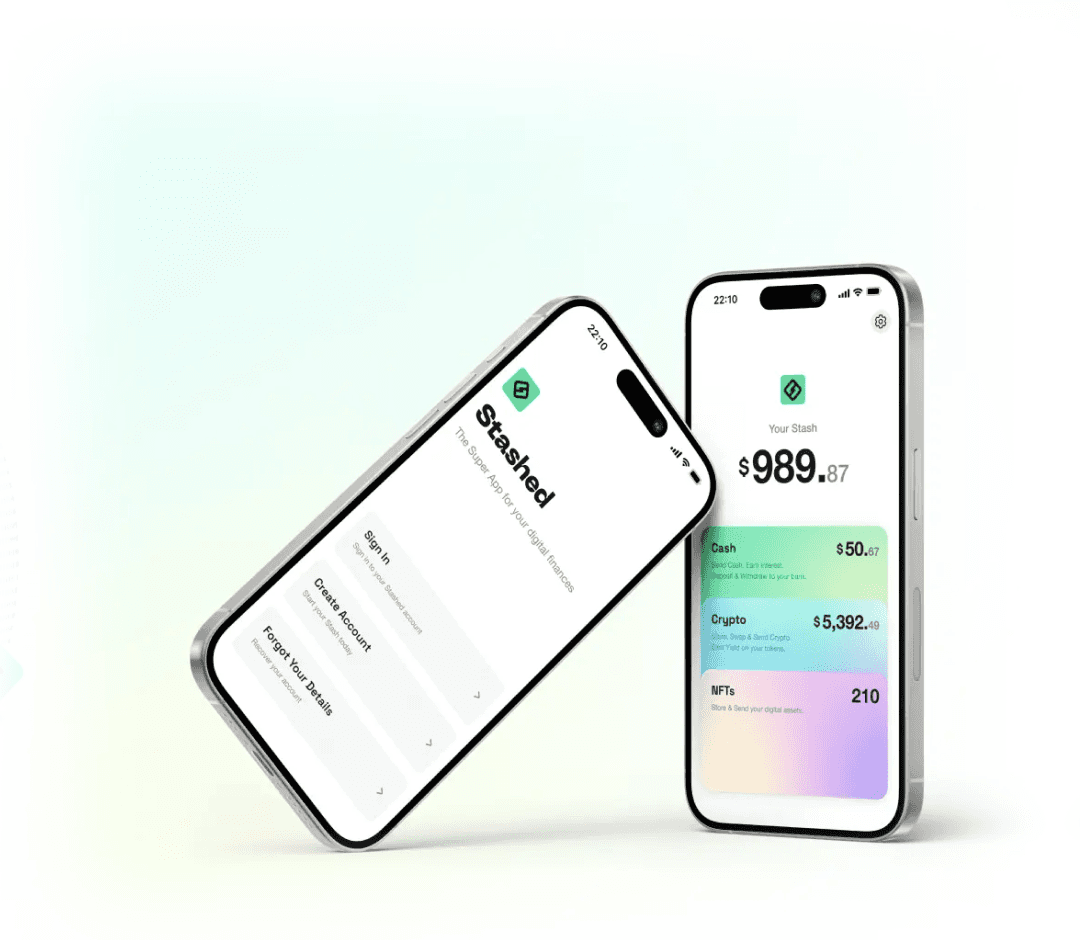
The Problem
The moment that defined the product
A user sends $500 to the wrong address. The interface shows a confirmation screen. They tap it.
No indication the address is unverified. No fee preview. No recovery. The transaction settles in seconds.
This wasn't a bug. It was the intended experience.
Crypto wallets have historically optimized for technical correctness. The assumption: users will educate themselves.
The reality: the moment of highest financial risk is designed to feel like the moment of least friction.
Confirmation screens exist but carry no weight. Fee breakdowns hide behind toggles. Network selection is treated as a setting, not a decision. The result isn't careless users it is an interface that makes dangerous actions feel safe.
Design Hypothesis
If users can see the consequence before they commit clearly, and at the right moment anxiety drops and confidence increases.
Three decisions that shaped everything.
Progressive disclosure over upfront education
1
Users don't read onboarding. Context appears exactly when it matters.
Error prevention over error messaging
2
Prevent failure before execution don’t explain it after.
One strong confirmation, not many weak ones
3
Warnings lose meaning when repeated. Trust comes from clarity, not noise.
Making irreversible actions feel understandable.
Onboarding flow
No upfront lecture.
Key education appears in context
Security explanations surface when decisions are made
Complexity is introduced progressively
The Send Challenge
Highest-risk flow in the product.
Financial irreversibility creates cognitive stress
One intent per screen — no parallel decisions
Technical steps (asset, network, gas) are sequenced deliberately
Trust Pattern Applied
Trust is enforced, not implied
Asset and network context never disappears
Fees are simulated before commitment
Confirmation is explicit and irreversible
System always communicates state (pending → success → failure)
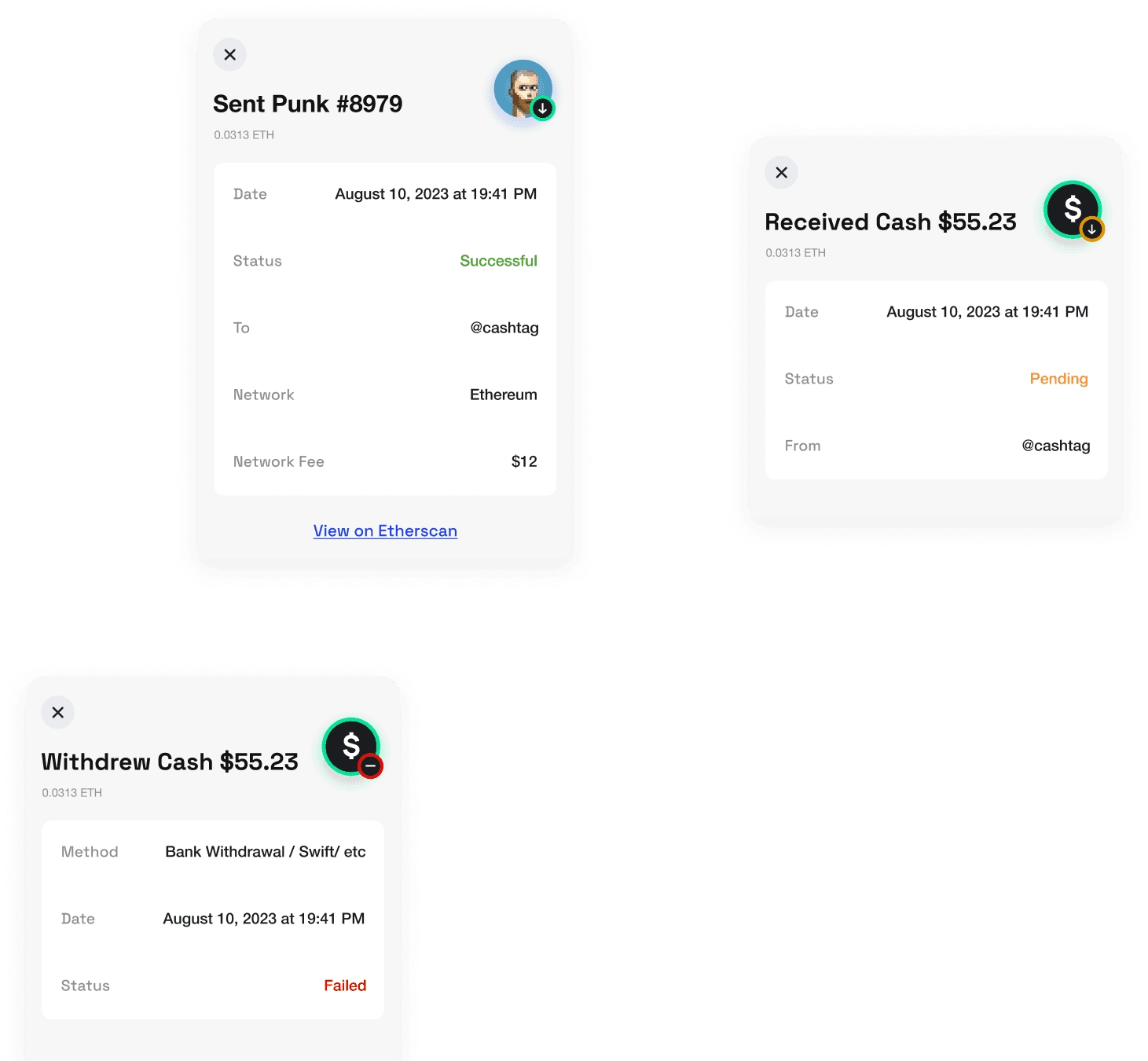
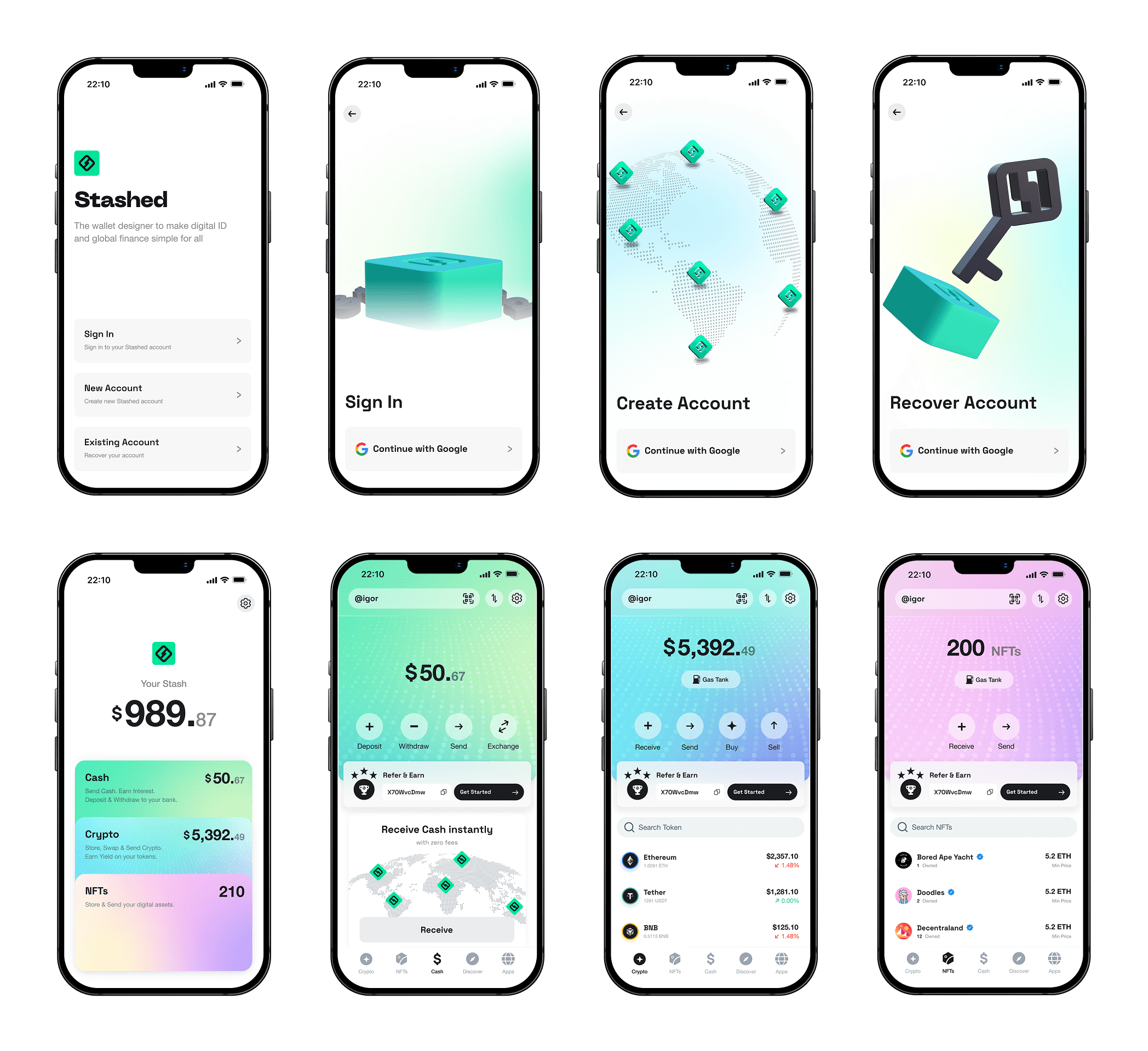
Trust is not a screen. It's a system.
Confidence doesn't come from a single interface.
It emerges from how the entire system behaves — built bottom-up so each layer enables the one above it.

Stashed Trust Stack
1
Interface Layer
User-facing
Reduces cognitive load through guided flows.
Progressively reveals complexity. Optimized for high-pressure decisions.
2
Transaction Layer
Decision layer
Validates input before execution. Introduces explicit checkpoints before irreversible actions. Surfaces fee and asset context clearly.
3
State Layer
Feedback layer
Keeps users aware at all times. Communicates pending, success, and failure states clearly. No dead ends — always a next step.
4
Blockchain Layer
Foundation
Abstracts technical complexity without hiding consequences. Ensures safe execution. Separates infrastructure reliability from UI decisions.
Same architecture. Different interaction model.
Trust behaves differently depending on context.
The principles are consistent how they are expressed adapts to each platform's cognitive environment.
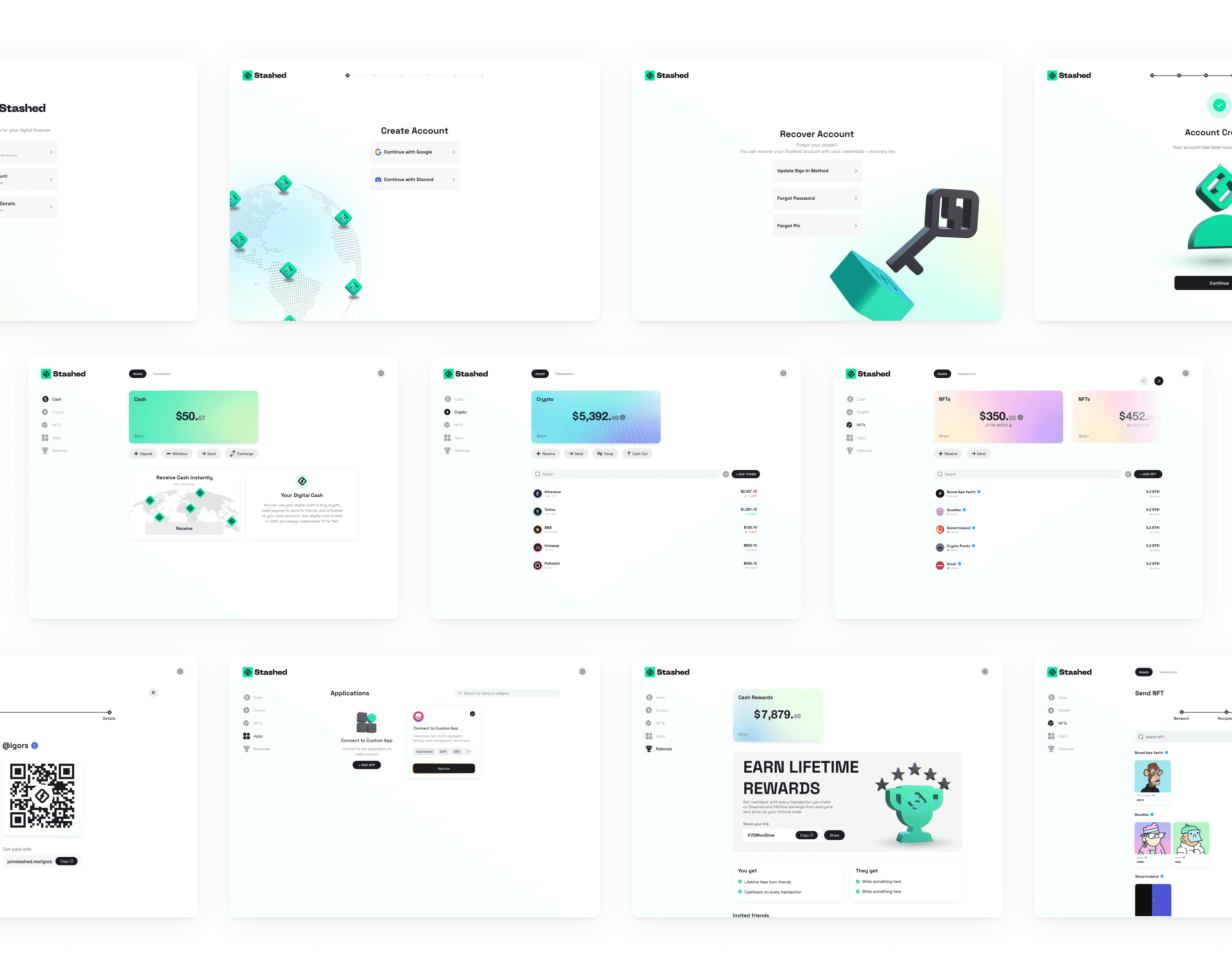
What this validated and where it fell short.
Trust behaves differently depending on context.
The principles are consistent how they are expressed adapts to each platform's cognitive environment.
Validated
Trust is a system property, not a screen.
Reducing decision density lowered anxiety. Users completed actions with more confidence when context remained visible.
Explicit confirmation beats hidden automation.
Users preferred understanding cost and consequence — even when it introduced friction.
Consistency across platforms builds trust.
A shared interaction model reduced cognitive load when switching contexts.
Gaps
We designed one flow for all users.
Novice and advanced users need different levels of guidance. One experience didn’t scale.
Seed phrase backup still struggled.
Progressive disclosure didn’t translate to high-anxiety recovery moments.
The confirmation gate shipped too late.
It became the highest-impact change — and should have been a launch requirement.
If I continued
Adaptive UX
Evolve the interface based on user behavior and experience level.
Real-time network intelligence
Surface gas, congestion, and timing before commitment.
Risk-tiered interactions
Align friction with transaction size and consequence.